New York — In March 2026, Israeli artist Eli Gross presented his solo exhibition 1956 in Manhattan, drawing hundreds of visitors and offering a striking artistic response to questions that sit at the core of Jewish identity: memory, exile, belonging, and continuity.
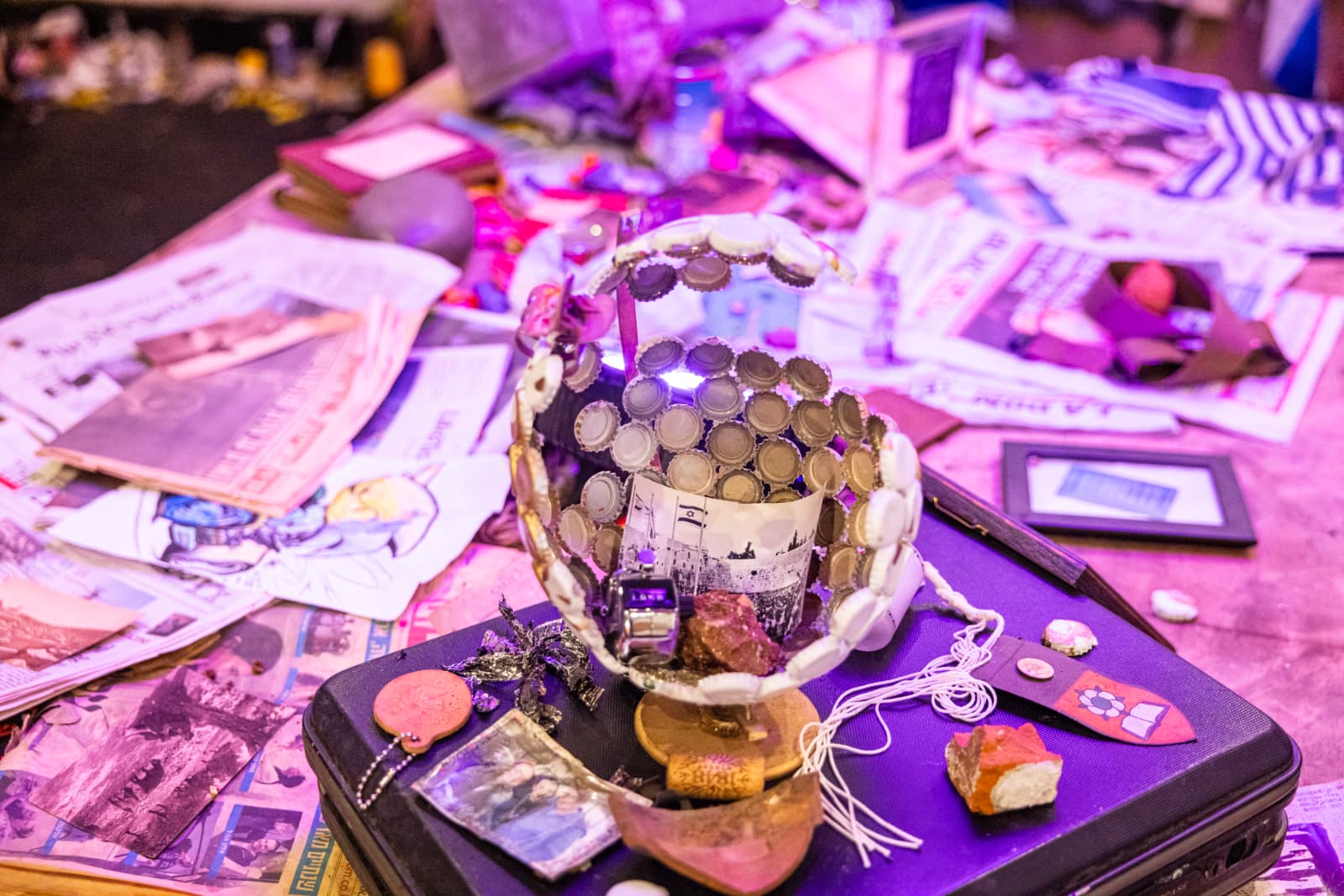
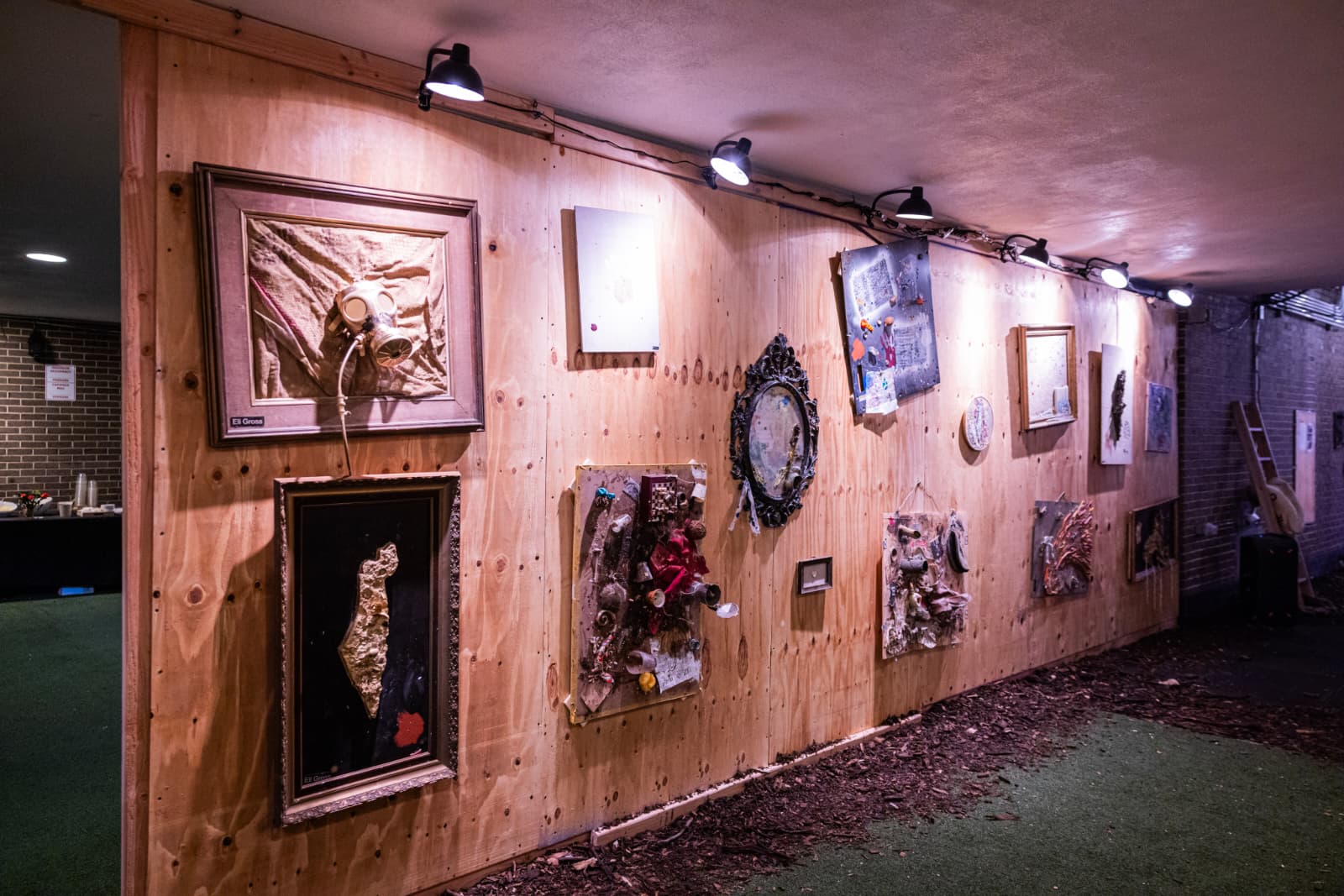
The exhibition did not present a single narrative, but rather constructed a layered environment in which history, personal experience, and collective memory converge. Through a body of works built from charged materials, Gross created a space where viewers are not merely observers, but participants in an ongoing story.
At the heart of the exhibition stood The Menorah of Hope, a large-scale sculptural installation formed from authentic missile fragments launched at Israel from multiple fronts, alongside elements of Iron Dome interceptors. First installed at Hostages Square in Tel Aviv, the Menorah quickly became one of the defining visual symbols of the period, functioning simultaneously as an artwork, a memorial, and a site of public gathering.
Visitors to the installation physically engaged with it, tying ribbons around its branches as acts of solidarity, remembrance, and prayer. Over time, the work absorbed these gestures, transforming from an object into a living archive of collective emotion. When brought to Manhattan, it carried with it not only its physical structure, but also the accumulated weight of those interactions.
Gross’s artistic practice centers on transformation. Materials originally designed for destruction are removed from their original context and reassembled into new forms that carry meaning, continuity, and presence. In 1956, fragments of missiles, industrial metals, earth, and found objects are woven into a unified visual language that collapses boundaries between past and present.
Rather than separating historical timelines, the exhibition creates a shared space where different eras coexist. The wandering of a people across centuries finds resonance in contemporary experience, and individual biography merges with collective narrative. The result is not a historical reconstruction, but a living conversation between time periods, geographies, and identities.
Born into a Hasidic family in Jerusalem, Gross’s personal trajectory forms an integral layer of the exhibition. His path moves from a traditional religious upbringing, through years in the technology sector, and into prolonged reserve military service during one of Israel’s most complex periods. It was during this time that his exposure to the material reality of conflict began to shape a new artistic vocabulary.
Where others might see debris, Gross identifies fragments of narrative. Each piece of material carries with it a trace of an event, a moment, or a place. By recontextualizing these fragments, he transforms them into vessels of memory, bridging the immediate present with deeper historical currents.
The exhibition also included works by a close circle of Israeli artists, each connected to Gross through ongoing collaboration and shared experience. Rather than functioning as a formal group, these artists contribute to a living network, where personal relationships, artistic processes, and cultural narratives intersect.
Their works expand the exhibition’s scope, introducing additional layers of interpretation while maintaining a unified conceptual framework. Together, they reflect a broader spectrum of Israeli society, shaped by diversity, tension, and resilience.
For many visitors, particularly within the Jewish community in New York, 1956 resonated as more than an art exhibition. It offered a language through which complex realities could be processed, not through abstraction alone, but through physical presence. The materials themselves, marked by history, create an encounter that is both immediate and reflective.
In a time when conversations around Israel, identity, and belonging are often polarized or fragmented, the exhibition provides an alternative mode of engagement. It does not attempt to simplify or resolve these tensions, but instead holds them within a shared space, allowing for multiple perspectives to coexist.
The symbolic center of this approach is the Menorah itself. Rooted in ancient Jewish tradition, it is reimagined here through contemporary material. The act of transformation, turning instruments of destruction into a structure dedicated to light, becomes both a conceptual and physical statement.
Following its presentation in Manhattan, Exhibition 1956 is now set to continue its journey across the United States. Plans are underway to bring the exhibition to additional cities, engaging Jewish communities, cultural institutions, and broader audiences.
Communities and organizations interested in hosting the exhibition are invited to submit proposals, with full details available in the accompanying materials . The process involves not only logistical coordination, but also a commitment to engaging with the themes and questions the exhibition raises.
As the exhibition moves forward, it carries with it the same core intention that defined its presentation in Manhattan: to create a space where memory is not static, but active; where history is not distant, but present; and where art serves as a bridge between what has been and what continues to unfold.
In this sense, 1956 is not a fixed exhibition, but an evolving journey. Each new location adds another layer of context, another set of encounters, and another chapter to its unfolding narrative.
For communities across the United States, the opportunity to host the exhibition is not only a cultural event, but an invitation to participate in a broader conversation, one that connects local experience to a shared, ongoing story.
And perhaps that is the most enduring aspect of Gross’s work: the insistence that even in moments shaped by fragmentation and uncertainty, it is still possible to construct meaning, to build continuity, and to create light.